

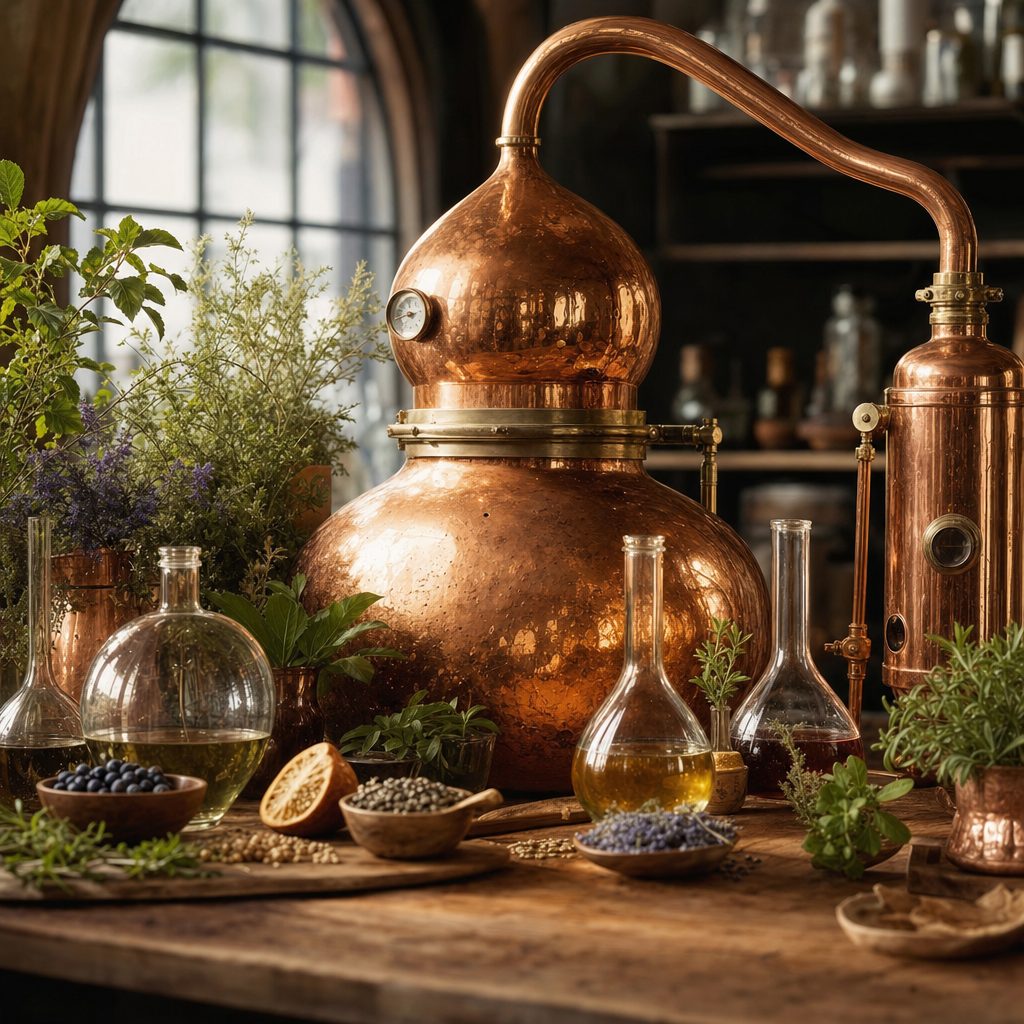
Pour a glass of non-alcoholic gin and you are looking at a small mystery. Juniper, citrus peel, and coriander are all there on the nose, but the thing that traditionally carries those flavors, distilled alcohol, is missing. So how are non-alcoholic spirits made? The short answer is that there are a few very different methods, and knowing which one a producer uses tells you a lot about what to expect before you ever open the bottle.
The category has grown from a curiosity into a full shelf at most decent bottle shops, a shift we traced in our look at the rise of zero-proof spirits. Growth has also brought confusion, because products made in completely different ways now sit side by side at similar prices. Here is how it all works, in plain language.
Two Paths to the Same Shelf
Almost every bottle in the category follows one of two broad approaches. The first is dealcoholization: make a full-strength alcoholic product the traditional way, then remove the alcohol afterward. This is how most non-alcoholic beers and wines are produced. The second is the never-fermented route: build the flavor from scratch through extraction and blending, so there is little or no alcohol to remove in the first place. Most products sold as gin, whiskey, or tequila alternatives take this second path, though some producers do use alcohol briefly during production as a solvent and strip it out at the end.
One footnote before we go further: in the United States, “non-alcoholic” generally means under 0.5 percent alcohol by volume, not necessarily zero. Some of the methods below leave trace amounts behind, which matters more to some readers than others. We dug into the details in Are Non-Alcoholic Spirits Actually Alcohol-Free?
Maceration: Steeping Flavor Like Tea
Maceration is the simplest tool in the kit. It just means soaking botanicals (juniper berries, citrus peels, spices, herbs) in a liquid until the liquid takes on their flavor, essentially what you do every time you steep a tea bag. In traditional gin production the soaking liquid is high-proof neutral spirit, and ethanol happens to be an excellent solvent that pulls out a wide range of flavor compounds, including the oily, resinous ones.
Water is a much weaker solvent. Producers working without alcohol compensate with longer steeping times, heavier botanical loads, gentle heat, or carriers like vegetable glycerin that grab and hold aromatic oils. The result tends to favor bright, tea-like top notes while missing some of the deeper resinous character an alcohol extraction would capture. That is a big part of why many zero-proof spirits taste lighter than their full-strength counterparts. It is not corner cutting; it is chemistry.
Vacuum Distillation: Boiling Without the Burn
Distillation means heating a liquid so that volatile compounds evaporate, then collecting and condensing that vapor. Vacuum distillation does the same thing at reduced pressure, and the physics work in the producer’s favor: lower the pressure inside the still and liquids boil at much lower temperatures, sometimes not far above room temperature.
Why bother? Heat is hard on delicate aromatics. Fresh citrus, florals, and green herbs can turn cooked and dull in a conventional still. Distilling under vacuum preserves them. Producers use the technique in two directions: some distill macerated botanicals under vacuum to capture clean, fresh aromatics, while others use it to gently pull alcohol out of a finished wine or beer without stewing the flavors they want to keep.
Seedlip, one of the earliest players in the category, built its reputation on distilling botanicals and blending the results, and you can taste that approach in a bottle like its Notas de Agave: aromatic and expressive up front, light on the palate underneath.
Dealcoholization: Make It, Then Unmake It
For beer and wine, most producers still start by brewing or fermenting the real thing. Then the alcohol comes out, usually by one of three routes. Vacuum distillation, covered above, evaporates the alcohol at low temperature. Spinning cone columns spread the liquid into thin films across stacked rotating cones while gas strips out volatile compounds; producers typically capture the delicate aromas first, remove the alcohol, then reunite the aromas with the base. Giesen has been open about using spinning cone technology for its 0% Sauvignon Blanc. Reverse osmosis takes a different route entirely, pushing the liquid through a membrane fine enough to separate alcohol and water from the larger flavor molecules, after which everything but the alcohol is recombined.
Here is the honest part: ethanol carries aroma, adds body, and rounds out the perception of sweetness. Remove it and some of the good stuff leaves with it. That is why dealcoholized wine often reads thinner and tarter than the original, and why non-alcoholic beers are rebalanced after the alcohol comes out rather than simply bottled as-is. Even a polished example like Heineken 0.0 is the product of a recipe built around that loss, not a regular lager with the alcohol quietly deleted.
Building Back Body and Heat
Ethanol does more in a drink than get you tipsy. It adds weight and texture, a touch of sweetness, a warming burn on the way down, and it literally lifts aroma out of the glass and into your nose. Take it away and a drink can feel thin and oddly quiet.
Producers have workarounds. Capsicum extract, from the compound family that makes chili peppers hot, supplies a warming tingle that stands in for alcohol burn. Glycerin adds a little viscosity. Bitter roots and barks like gentian and cinchona give structure and grip. Concentrated distillates punch up the aroma. Used well, these tricks add up to something genuinely satisfying. But it is worth saying plainly: none of them replicates ethanol exactly, and the better zero-proof producers do not really pretend otherwise. They aim for a drink that works on its own terms, especially once it is mixed.
What This Means When You Shop
Production method is one of the most reliable clues to character that a label can give you. A dealcoholized wine or beer will land closest to the original, just lighter and often a bit sharper. A distilled botanical spirit will lead with aroma and fade quickly on the palate, which is why most of them shine with tonic or soda rather than neat. An extract-based blend usually needs the structure of a full mocktail around it.
Whatever the method, judge the bottle in the format it was designed for. Try it in a mixed drink before you write it off from a bare sip. The category still has its misses, but the underlying techniques have matured to the point where the hits genuinely earn their spot on the shelf.
