
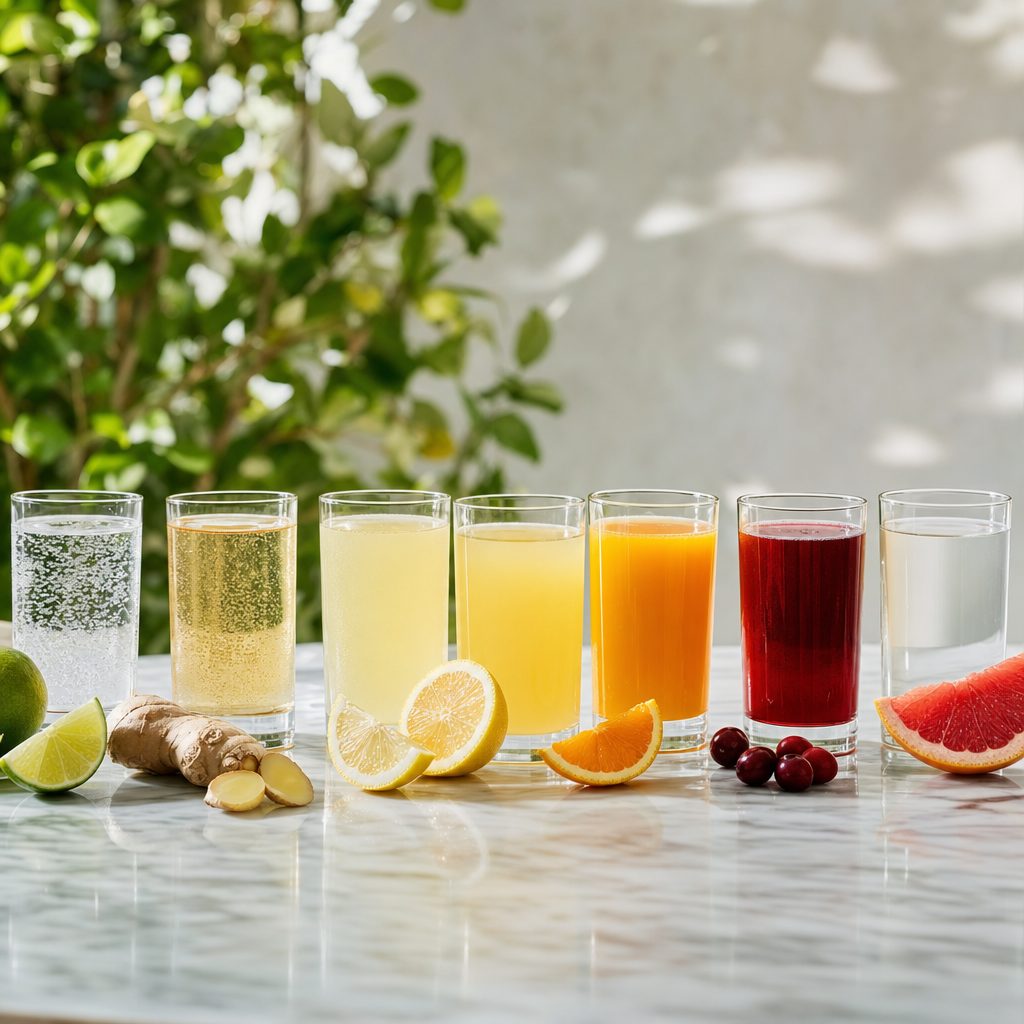
Pick up almost any non-alcoholic spirit and the label will tell you to mix it. That is not a dodge. Most zero-proof spirits are built as cocktail ingredients rather than sipping pours, and the mixer you choose does at least half the work in the finished glass. Consider this a practical cocktail mixers guide: the four big mixer families (tonic, soda, ginger, and citrus), matched to the NA spirit styles most likely to be sitting on your shelf.
Why Mixers Matter More in Zero-Proof Drinks
Alcohol does a lot of quiet work in a cocktail. It carries aroma, adds body, and leaves a warm grip on the finish. Remove it and the mixer becomes the loudest voice in the glass. A botanical spirit alternative that tastes vivid straight from the bottle can disappear under a sweet tonic, and a delicate aperitif-style pour (an aperitif being the lightly bitter, pre-dinner style of drink) will drown in ginger beer.
An honest note before we start: no mixer fixes this completely. Non-alcoholic spirits are generally lighter and more dilution-sensitive than their boozy counterparts, so the goal is matching intensity, not building an exact replica. Two habits help. First, use a little less mixer than a standard recipe suggests; starting around two parts mixer to one part spirit keeps the spirit audible. Second, taste each mixer on its own once, so you know exactly what it brings to the party.
Tonic Water: The Botanical Amplifier
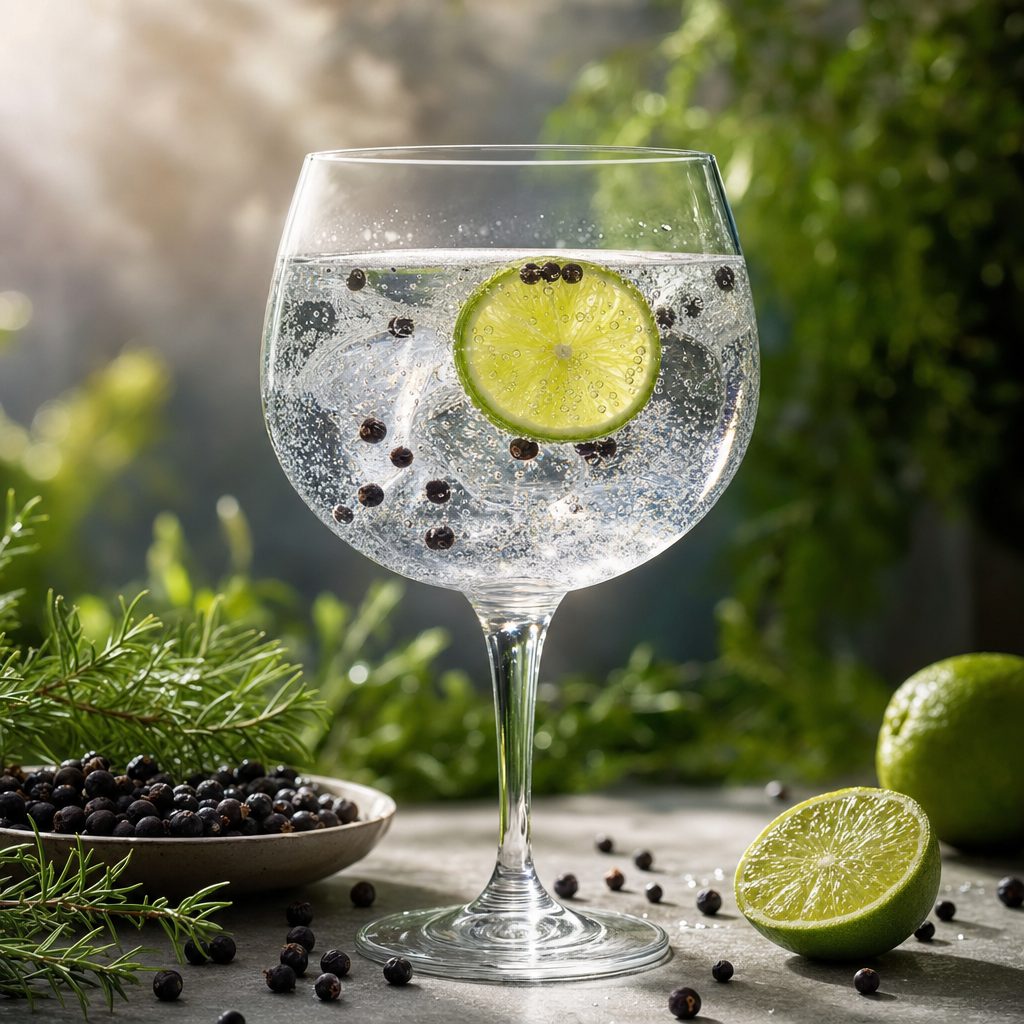
Tonic is carbonated water flavored with quinine, a bittering compound originally extracted from cinchona bark, then balanced with sweetness and citrus. That gentle bitterness is what makes tonic so useful: it stretches herbal and citrus notes rather than flattening them.
Reach for tonic first with gin-style NA spirits, where juniper, coriander, and citrus peel need a partner that will not smother them. It also flatters agave-style bottles; Seedlip Notas de Agave over a light tonic with a lime wedge is one of the easier wins in the whole category. The catch is sugar. Mainstream tonics can be sweet enough to bury a subtle spirit, so look for a drier, lighter style and hold the ratio close to two to one.
Soda Water: The Honest Canvas
Plain sparkling water brings bubbles, dilution, and nothing else, which makes it an honest canvas rather than a flavor of its own. It works best with NA spirits and aperitifs that already have plenty to say: bitter aperitif-style bottles, spiced tropical spirits, anything bold enough to carry a highball on its own.
Soda also doubles as a handy diagnostic tool. Mix any new bottle one to one with soda over ice. If the result tastes like faintly flavored water, that spirit is too light for tall drinks; save it for shaken builds with citrus and syrup, where it only has to add an accent. If the result tastes like a finished drink, congratulations, you have found your house spritz.
Ginger Ale and Ginger Beer: The Heavy Lifters
These two get lumped together and should not be. Ginger ale is the gentle one: lightly sweet, softly spiced, more polite than pushy. Ginger beer is louder, with real heat, more sugar, and a cloudier body. Both love whiskey-style NA spirits, whose vanilla, oak, and baking-spice notes have enough weight to stand up to ginger.
Ginger beer also does great things for tropical and spiced profiles. Something like Caleño with ginger beer and fresh lime lands close to a mule that took a holiday somewhere warm. The caution flag: ginger beer will bulldoze delicate botanicals, so keep it away from your lightest gin-style bottles.
Citrus: Fresh Juice and the Sour Build
Fresh lemon and lime are less mixers than structure. The classic sour template (two ounces of spirit, three quarters of an ounce of citrus, three quarters of an ounce of syrup, shaken hard with ice) works with nearly every NA spirit style, because acidity supplies some of the bite that missing alcohol leaves behind.
Grapefruit deserves its own mention. Its blend of sweetness, acid, and light bitterness flatters agave-style spirits especially; our Grapefruit Glow Paloma is the house example of how well that pairing works. And if you want citrus-like brightness with more depth, try a shrub, a fruit syrup made with vinegar, which adds tang and a little savory complexity that plain juice cannot.
The Matrix, in Plain Words
Here is the whole guide compressed. Gin-style spirits: tonic first, soda second, sour builds third, and skip ginger beer. Whiskey-style spirits: ginger ale or ginger beer first, a zero-proof whiskey sour second, tonic almost never. Agave-style spirits: grapefruit soda or fresh grapefruit first, tonic a strong second, ginger beer a respectable third. Aperitif-style bottles: soda for a spritz, tonic if you like your bitterness doubled, and go easy on ginger. Tropical and spiced spirits: ginger beer first, pineapple or citrus second, soda only if the bottle is genuinely bold. None of these pairings are laws; they are simply the combinations that succeed most often when a new bottle lands in the kitchen.
The Practical Takeaway
Stock small. One dry tonic, one neutral sparkling water, one ginger option, and fresh citrus will cover almost every bottle in the zero-proof aisle. Taste each mixer alone once, start your ratios at two to one instead of three to one, and adjust from there. The spirit may be the headline, but in non-alcoholic drinks the mixer writes most of the story, so choose it like it matters. It does.