

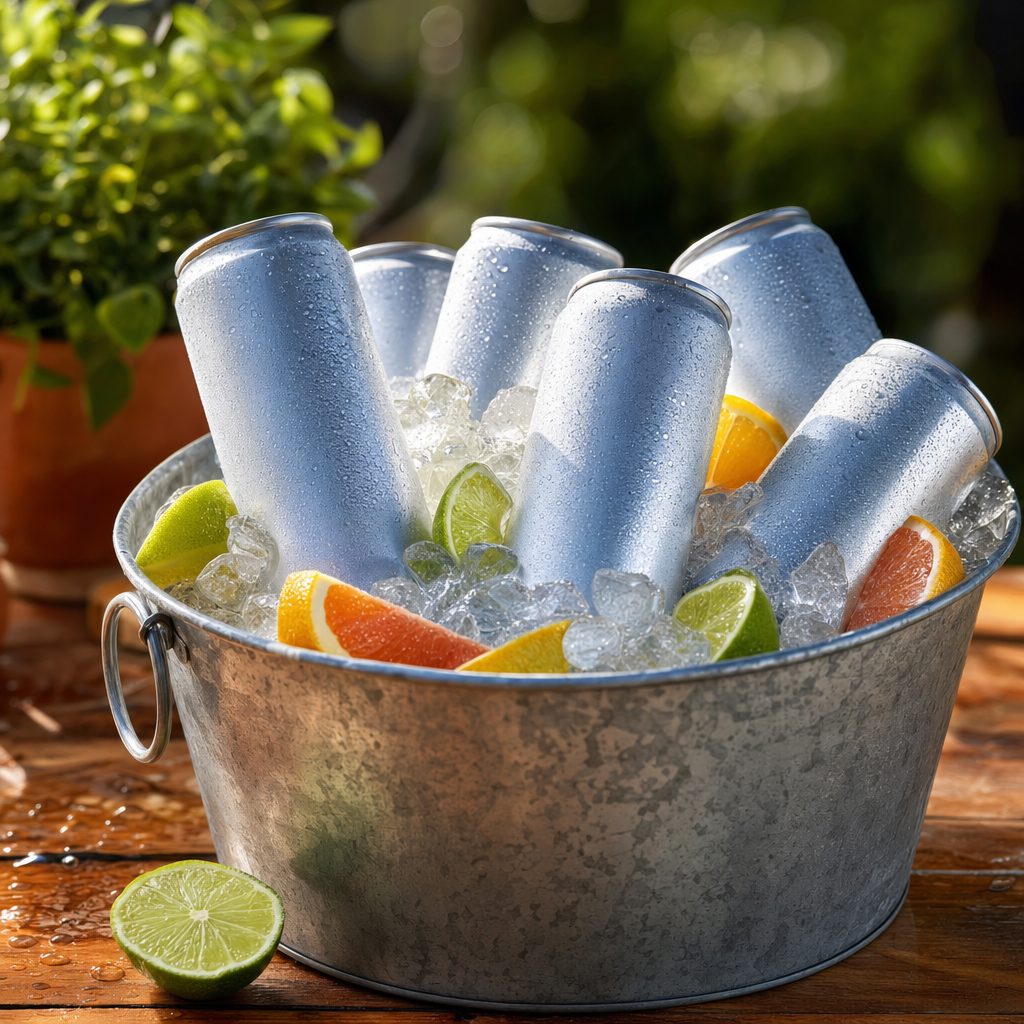
January is when the non-alcoholic shelf gets its moment, and this year the cans have clearly taken over from the bottles. Somewhere between the sparkling water aisle and the beer cooler now sits a whole zone of non-alcoholic seltzer, hop water, and canned mocktails, and it can be genuinely confusing to shop. This guide sorts the shelf into categories that actually mean something.
One term to know up front: RTD stands for ready to drink, industry shorthand for anything premixed and packaged, usually in a can. In the alcohol world that means hard seltzers and canned cocktails. In the zero-proof world it means the same formats minus the alcohol, and the category has been growing fast enough that big beverage companies keep piling in.
Nearly everything in this space falls into one of three buckets: hop waters, which borrow flavor from beer; zero-alcohol takes on hard seltzer, which borrow the format from White Claw and friends; and canned mocktails and spritzes, which aim at cocktail drinkers. Knowing which bucket a can belongs to tells you most of what to expect before you open it.
Hop Water: Beer Adjacent, Zero Everything
Hop water is sparkling water infused with hops, the same flowers that give beer its aroma and bitterness. There is no malt and no fermentation, so most versions have zero calories and zero sugar. Done well, you get grapefruit peel, pine, and a light bitterness that scratches a surprising amount of the beer itch.
HOP WTR, Lagunitas Hoppy Refresher, and Sierra Nevada Hop Splash are the names you will see most often, and Athletic Brewing’s DayPack brings a craft-beer pedigree to the format. Honest assessment: some of these read like beer-scented sparkling water, and the aroma writes a check the flavor does not fully cash. But as a cold, crisp, zero-everything option for a cooler, hop water earns its shelf space.
Zero-Alcohol Seltzer from the Big Brands
When White Claw announced its zero-alcohol line two years ago, it signaled that the biggest names in hard seltzer saw real money in the sober-curious crowd. These products position themselves as more than flavored sparkling water, with added mouthfeel ingredients and cocktail-inspired flavors.
The honest read: they land closer to a premium flavored seltzer than to the hard stuff, because the subtle warmth alcohol brings is simply not there. That is not a dealbreaker. If the ritual you miss is a cold can in hand at a barbecue, these deliver the ritual at a fraction of the consequences. Just do not expect the flavor to be dramatically different from a nice sparkling water with better marketing.
Canned Mocktails and Spritzes
This is the most interesting bucket and the most expensive one. Ghia’s Le Spritz cans put their bittersweet aperitivo (a lightly bitter, before-dinner style of drink) over soda in a package that feels legitimately grown up. De Soi, co-founded by Katy Perry, makes sparkling aperitifs built around botanicals and adaptogens. Adaptogens, if the label jargon is new to you, are herbs like ashwagandha marketed for stress support; the evidence behind them varies a lot, so treat them as flavoring with a wellness story rather than medicine. Curious Elixirs and Mingle Mocktails round out the shelf with premixed, cocktail-styled options.
Flavor-wise this bucket has the highest highs. Bitterness, real acidity, and layered spice survive the can far better than fake booze burn does. The catch is price: many of these cost as much per can as a craft cocktail ingredient, which is part of a bigger pattern we dug into in why non-alcoholic drinks come at a premium.
How to Shop the Shelf
One label note before the filters: in the United States, non-alcoholic on a can generally means under 0.5 percent alcohol by volume, a trace level also found in some kombuchas and very ripe fruit, while alcohol-free is reserved for truly zero. Most of the cans in this guide skip fermentation entirely and sit comfortably at zero, but if the distinction matters to you, the fine print settles it.
A few practical filters make the wall of cans manageable:
- Check the sugar. Hop waters are usually zero. Canned mocktails range from nearly nothing to soda territory. The nutrition panel takes five seconds and saves regret.
- Check the functional ingredients. If you are pregnant or take medication, look for adaptogens and other botanicals on the label and ask your doctor before making them a habit.
- Do the per-can math. A four-pack at sixteen dollars is a four-dollar drink. Sometimes that is worth it. Sometimes it is a hop water at half the price.
- Buy singles first. Wherever the store allows it, try one can before committing to a case. This category punishes blind loyalty.
And if you find yourself buying canned mocktails several nights a week, a bottle strategy is cheaper. Our roundup of the best zero-proof spirits of 2025 covers bottles that will make months of drinks for the price of a few four-packs.
Where This Is Headed
Expect more crossover, not less. Beer companies keep adding hop waters, seltzer brands keep adding zero-alcohol lines, and the aperitivo can has gone from novelty to fixture. For the NA-curious drinker, that competition is nothing but good news: better cans, more variety, and gradually saner prices. Start with one from each bucket and let your fridge run the taste test.
If Dry January brought you here, treat the month as a sampler window. Stores stock their widest zero-proof selection right now, and the cans that earn a spot in your fridge in January will still be there in July.
This article is for general information only and is not medical advice. Talk to your doctor about how alcohol interacts with your health.
